Category: Blog

Your blog category

  • Stop being ‘creative’ in your marketing! Here’s the truth behind why boring marketing is 10x more effective.

    Key Points

    • Boring marketing is predictable and allows you to scale your revenue without guessing.
    • Clarity always wins over cleverness because confused people do not buy things.
    • Consistency and repetition are more valuable than a single viral moment.
    • Treating your marketing like an assembly line removes the stress of needing constant inspiration.
    • Systems create freedom while random "creative" acts create expensive chaos.

    Last Tuesday morning, I sat at my desk with a headache, lukewarm coffee, and two spreadsheets that told very different stories. On the left was a colorful gallery of 'creative ideas', wild video concepts, and edgy taglines. On the right was a dry math assignment, our revenue systems report. While the creative column was a graveyard of expensive experiments, the boring systems column was where the actual money lived. Then I glanced at the vending machine in the break room. Same buttons. Same snacks. Same result every time. That was the point. My desire to be 'creative' was killing my business.

    Most business owners think they need a stroke of genius to grow. They wait for inspiration like it's a bus that's always late.

    They want to go viral.

    They want people to talk about how clever their ads are.

    But while they wait for that one perfect spark, their business stays stuck. They're playing a game of chance while the big players are playing a game of math.

    The high cost of being clever

    When you try to be too creative, you usually end up being confusing.

    You use wordplay that nobody understands.

    You hide your logo because it "ruins the aesthetic" of your post.

    You try to be edgy but you forget to tell people what you actually sell.

    This is a massive mistake.

    Marketing is not an art project. It is an operation.

    Think about the most successful brands you know.

    They do not change their message every week.

    They say the same thing, in the same way, for decades.

    That is why you know exactly who they are and what they do.

    If you have to be a genius to understand an ad, the ad has failed.

    The truth is that clarity is your best salesperson.

    If people have to guess what you do, they will not buy.

    They will just keep scrolling.

    You have about two seconds to grab someone's attention in a crowded feed.

    In those two seconds, clarity is the only thing that matters.

    Digital illustration showing messy shapes turning into a solid pillar, symbolizing clarity in marketing.

    I see local businesses do this all the time. They run ads that look like movie posters. They use fancy fonts that are impossible to read. It looks great on a portfolio, but it does not put money in the bank. You need to be unmistakable. You need to use simple words. State the problem you solve. Offer the solution. Tell them exactly what to do next. It sounds boring because it is. But it works because it removes the friction between a customer and a sale.

    If you are tired of guessing and want a system that actually grows your business, you should book a 30-minute call with me.

    Building a marketing engine

    A marketing engine runs on a schedule.

    It does not care if you feel inspired today.

    It does not care about the latest "hack" or trend.

    It just does the work.

    When you rely on creativity, you are relying on your mood.

    When you rely on a system, you are relying on a machine.

    Think about your business like a vending machine.

    You stock it.

    You label the buttons.

    You make sure the payment works.

    Then people walk up, press what they want, and get a result.

    Marketing should be the same way.

    You need a process for generating leads.

    You need a process for following up.

    You need a process for closing the deal.

    A branded purple graphic displaying a testimonial statement from Nick Hayes. It highlights shifting from overthinking content to managing 5+ social media platforms efficiently using effective systems, emphasizing Hayes Advertising's philosophy of valuing strategy and processes over manual effort.

    When you have a boring system, you have a predictable business.

    You know that if you stock the right thing in the machine and press the right button, you get the result you expect.

    That is a lot more exciting than a viral video that gets a million views but zero actual customers.

    Systems give you the freedom to step away from your desk.

    They give you the peace of mind that your business is growing even when you are not "on."

    Consistency beats intensity every time

    Most people quit because they don't see results in the first week.

    They try one "creative" thing, it fails to go viral, and they give up.

    But the winners are the ones who show up every day with the same "boring" message.

    Repetition is how you win the game of marketing.

    You want people to see your brand so often that they can't help but remember you.

    You want to be the person they think of the second they have a problem you can solve.

    This doesn't happen by being flashy once.

    It happens by being present a thousand times.

    Interconnected gears symbolizing a consistent marketing system that drives predictable business results.

    Saturation and consistency matter more than novelty. If people do not know it is you, it does not matter what you said. You can have the most beautiful ad in the world, but if your logo is hidden or your message is vague, you just wasted your money. You are just entertaining people for free.

    Stop waiting for the muse

    Don't wait for a great idea to start your marketing.

    Start with the basics.

    Fix your website so it's easy to use.

    Set up your email automation so you can talk to your leads while you sleep.

    Run simple ads that tell people exactly what you do.

    Social media post mockup on a purple gradient background with testimonial text about a gym owner struggling with frequent but ineffective posting. Highlights Hayes Advertising’s focus on proven systems that generate leads and $100K+ in client revenue, encouraging direct conversation over random content.

    Once the boring stuff is working, then you can play with "creative" ideas.

    But never let the creativity get in the way of the system.

    The system is the foundation of your house.

    Creativity is just the paint on the walls.

    If you try to paint a house that has no foundation, the whole thing will fall over.

    Marketing is about results.

    It's about revenue.

    It's about building a business that can support your life and your family.

    If you have to be "boring" to achieve those goals, then you should be the most boring person in the room.

    Stop overthinking your content.

    Stop trying to be an artist.

    Start being an operator.

    Build the machine.

    Turn it on.

    Let it run.

    Your bank account will thank you for it.

    Ready to build a predictable marketing engine for your business? Let's talk about how to stop the "creative" madness and start getting real results. You can book a 30-minute call with me to get started today.
  • Untitled post 57

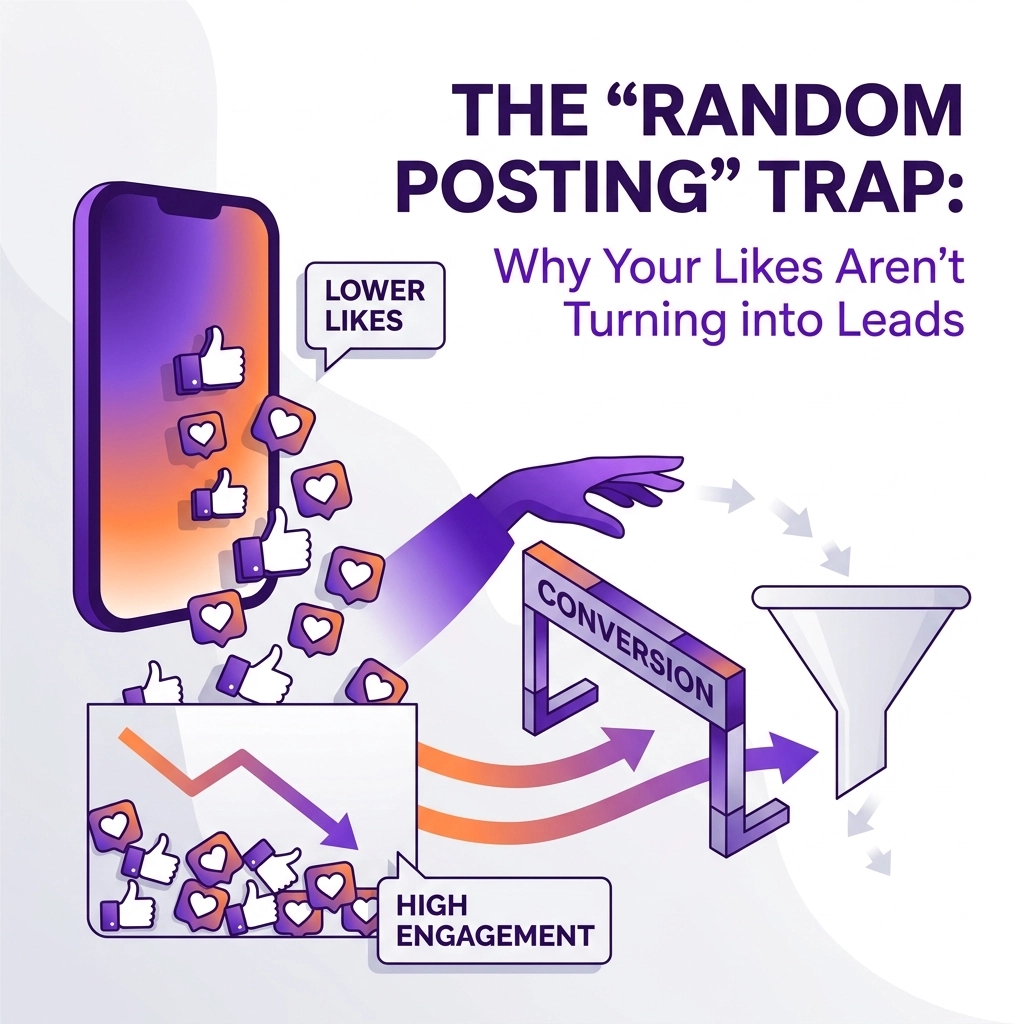
    Last month, I sat across from a gym owner staring at a phone like it had personally betrayed them. A reel had done well. The comments were solid. People dropped fire emojis, flex emojis, and the usual "let's go" stuff. On paper, it looked like momentum. In real life, there were no new sign-ups, no full trial calendar, and no real lift in revenue.

    It reminded me of a pizza shop owner putting on a show in the front window all day.

    They're tossing dough high in the air. People stop on the sidewalk and watch. Someone films it. Instagram loves it. The post gets 500 likes. A little crowd forms outside.

    But in the back, the oven is cold.

    There's no one at the register. No checkout. No clear way to order or pay.

    That shop looks busy, but it isn't built to make money.

    That problem isn't rare.

    A lot of business owners are posting all the time and still not seeing real results. The issue usually isn't effort. It's that the strategy is loose, random, or missing key parts.

    So let's make it clear.

    Here are 10 reasons your organic social media strategy isn't working, and how to fix each one.

    Key Points

    • Organic social media can look busy while doing very little for your business.
    • Likes are nice, but they don't mean people are ready to buy.
    • Each post needs a job if you want your content to help sales.
    • A simple system helps you get attention, build trust, and drive action.

    The Pizza Shop Problem

    Picture that pizza shop again.

    The dough tossing is the attention.

    The oven is the system that delivers the product.

    The checkout is how the business gets paid.

    If the owner only focuses on the show in the front window, people may watch, like, and cheer, but they still can't buy.

    That's what bad organic social media feels like.

    You post three times a week. You test reels. You try carousels. You copy trends. You tweak captions in the front seat before walking into work.

    The account stays active, but the pipeline stays quiet.

    That's the trap.

    You feel productive because you're doing something. But activity isn't strategy. If your content doesn't lead people somewhere, you're just tossing dough in the window while the oven stays cold.

    system-over-random-posting-social-media-mockup.png

    1. You're posting for attention, not action

    A post can get likes and still do nothing for your business.

    That's because attention is only the first step. If the post never leads people anywhere, it stops at the tap.

    How to fix it

    Decide the job of the post before you write it.

    Ask:

    • Is this post meant to grab attention?
    • Is it meant to build trust?
    • Is it meant to get someone to act?

    If you can't answer that, don't post it yet.

    2. You're talking to the wrong people

    A lot of content is too broad. It sounds nice, but it doesn't hit anyone hard enough to matter.

    If you're a gym owner, "fitness tips" is too wide. The person who needs you might be a busy parent who wants to lose 15 pounds and stop feeling wiped out by 3 p.m.

    How to fix it

    Talk to one real type of buyer.

    Use the stuff they already think about:

    • Tight jeans
    • Low energy
    • Skipping workouts
    • Feeling lost in a big gym

    Specific content brings in specific people.

    3. Your hook is too weak

    Most people decide in a second if they care.

    If your post starts soft, slow, or generic, they scroll right by.

    How to fix it

    Lead with the sharp part first.

    Try lines like:

    • "Why your gym posts get likes but no sign-ups"
    • "The real reason people stop showing up after week two"
    • "You're not bad at social media. You're just posting the wrong stuff"

    Start where the pain is.

    4. You're only posting polished highlights

    Nice photos help. Clean branding helps. Good video helps.

    But if all you show is the shiny end result, people don't learn why they should trust you.

    How to fix it

    Show the real work behind the scenes.

    Post things like:

    • What a first session looks like
    • What beginners get wrong
    • How you coach form
    • Why your plan works better than random workouts

    Teach people how you think. That's what builds trust.

    5. You sound too stiff

    If your captions sound like a brochure, people tune out.

    Most buyers don't want perfect brand talk. They want to hear a real person who understands their problem.

    How to fix it

    Write like you talk.

    Use simple words. Cut filler. Say the point fast.

    Instead of:
    "Helping clients optimize wellness outcomes through customized programming."

    Try:
    "I help busy people get stronger without living in the gym."

    That sounds human.

    volume-vs-vanity-social-post.png

    6. You're not building trust often enough

    People rarely sign up because of one post.

    They need to see you a few times. They need proof. They need to feel safe spending money with you.

    How to fix it

    Make trust content part of your weekly plan.

    Post:

    • Client wins
    • Common mistakes
    • Quick lessons
    • FAQs
    • Behind-the-scenes clips
    • Simple tips that actually help

    Trust grows when your content is useful, clear, and real.

    7. You never ask for the next step

    This one is simple and brutal.

    A lot of businesses post good content, then never tell people what to do next.

    No invite. No offer. No path.

    How to fix it

    Use clear next steps.

    Tell people to:

    • Send a message
    • Grab a trial
    • Click the link
    • Ask a question
    • Book a consult

    And if you want help building a strategy that actually leads somewhere, book a 30-minute call with me.

    8. You're posting a lot, but not with a plan

    Posting often isn't the same as posting well.

    If every post is random, more volume just gives you more random.

    How to fix it

    Use a simple content rhythm.

    Try this:

    • One post for attention
    • One post for trust
    • One post for conversion

    That's enough to stay clear without burning out.

    9. You're watching the wrong numbers

    Likes can fool you.

    A post with weak likes can still bring leads. A post with strong likes can still bring nothing.

    How to fix it

    Track numbers that show buying intent:

    • Shares
    • Saves
    • Profile visits
    • Link clicks
    • Messages
    • Leads
    • Sign-ups

    Watch what moves people closer to action.

    branded-purple-graphic-testimonial-hayes-advertising.png

    10. You don't have a real system

    This is the big one.

    Most social media strategies fail because the content isn't connected. Each post lives on its own, with no bigger plan behind it.

    That makes your marketing feel like guesswork.

    How to fix it

    Build around a simple system:

    • Attention to stop the scroll
    • Trust to make people believe you
    • Capture to turn interest into action

    When those three parts work together, your content stops wandering and starts doing a job.

    What this looks like in real life

    Let's go back to that gym owner.

    The problem wasn't that the content looked bad. The problem was that it stopped at attention.

    Once the strategy changed, the content got sharper.

    One post called out why people keep "starting over" every Monday. That got attention.

    One post showed what a first week of coaching actually looks like. That built trust.

    One post offered a simple trial with a clear next step. That gave people a way in.

    That's when the content stopped acting like front-window dough tossing and started acting like a real system.

    creative-at-work-office-desk-laptop.webp

    How to check your own strategy

    Look at your last 10 posts.

    Then ask:

    • Did this post target the right person?
    • Did it open strong?
    • Did it teach something useful?
    • Did it sound human?
    • Did it tell people what to do next?
    • Did it fit into a bigger system?

    If most of those answers are no, you don't need more posting. You need better direction.

    That's the lesson.

    You don't need to be louder. You need to be clearer. Otherwise, you're just tossing dough in the front window while the oven stays cold.

    If you want to build an organic social media strategy that gets attention, builds trust, and brings in leads, book a 30-minute call with me. We'll look at what's not working and fix the gaps.

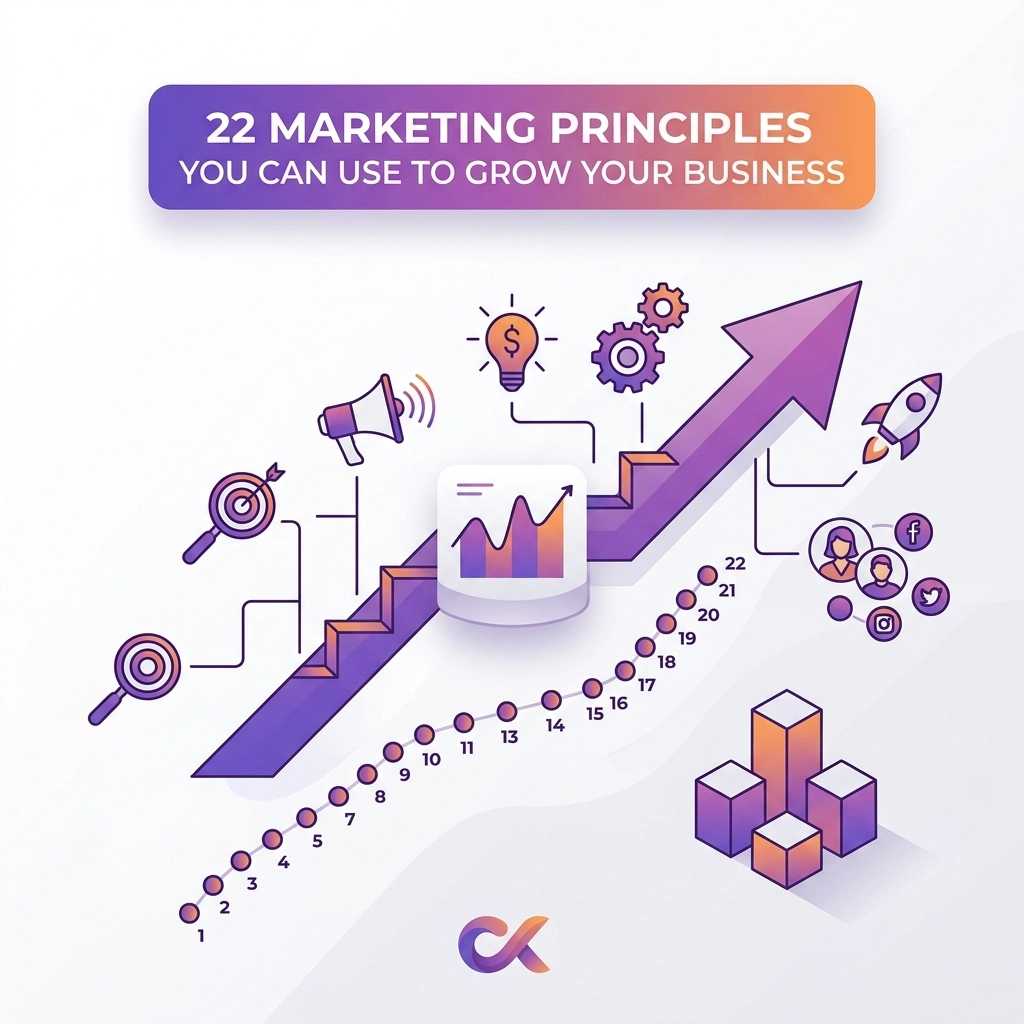
  • 22 marketing principles you can use to grow your business

    22 marketing principles you can use to grow your business

    I'm turning 22 today! To celebrate my birthday, I wanted to give you 22 marketing principles you can use today to grow your business! I hope you enjoy.
    Here they are:

    Tip 1: Consistency

    You have to show up every single day.

    If you only post when you feel like it, people will forget you exist.

    It's like being a friend who only calls when they need a favor.

    You want to be the person they see all the time so they trust you.

    Tip 2: Clarity

    Your message must be very easy to understand.

    If a 5th grader can't tell what you sell, it's too hard.

    Stop using big words to try and look smart.

    Use simple words so people know how you can help them.

    Tip 3: Know your audience

    You need to know exactly who you're talking to.

    If you try to sell to everyone, you'll sell to no one.

    Find out what makes your customers sad or happy.

    When you speak directly to their problems, they'll listen to you.

    Tip 4: Email lists

    Social media is great, but you don't own it.

    The big companies can change the rules and hide your posts.

    Your email list belongs to you forever.

    It's the best way to talk to your best customers whenever you want.

    Tip 5: Organic social

    Don't just use social media to sell things.

    Use it to talk to people and be a human.

    Share stories and show people what happens behind the scenes.

    This builds a real bond that makes people want to support you.

    Tip 6: Copywriting

    The words you use are like a magnet.

    Good writing tells a story and makes people feel something.

    Don't just list facts about your product.

    Tell people how their life will be better after they buy it.

    Tip 7: Leadership

    It's better to be the first person in a new group than to be better than someone else.

    People always remember who was first.

    If you're the first one to do something, you become the leader.

    It's much harder to catch up than it's to lead the way.

    Tip 8: Category

    If you can't be the first in one group, start a new one.

    Find a small niche where you can be the best.

    Maybe you aren't the best baker in town, but you can be the best at making blue cookies.

    Being the only person doing something makes you special.

    Tip 9: The Mind

    It's better to be first in someone’s mind than to be first in the store.

    Marketing is a race to get inside people's heads.

    If they think of you first when they have a problem, you win.

    You want your name to be the answer to their question.

    Tip 10: Perception

    Marketing isn't about who has the best product.

    It's about what people think is the best product.

    How people see you is the only thing that matters in business.

    You must work hard to make sure people see you as the expert.

    Tip 11: Focus

    Try to own just one word in the customer's mind.

    When people think of "safety," they might think of a certain car.

    When they think of "fast," they might think of a certain food.

    Pick your word and don't let it go.

    If you want to stop guessing and start growing, you should book a 30-minute call with me.

    We'll look at what you're doing right now.

    Then we'll help you build a system that gets you leads on autopilot.

    Tip 12: Exclusivity

    You can't own a word that another company already has.

    If a big brand owns the word "cheap," don't try to be the cheap one.

    Find a word that's still open.

    Trying to steal someone else's spot is a waste of time and money.

    Tip 13: The Ladder

    There's a ladder in every person's mind for every product.

    Some brands are at the top and some are at the bottom.

    You need to know which step you're on.

    Your plan should change based on if you're the leader or the underdog.

    Tip 14: Duality

    In the long run, every market usually becomes a race between two big names.

    Think about soda or phones.

    There are usually two main choices people think about.

    Your goal is to become one of those two big choices.

    Tip 15: The Opposite

    If you're the number two brand, don't copy the leader.

    Do the exact opposite of what they're doing.

    If they're for old people, you should be for young people.

    This gives people a clear reason to choose you instead of them.

    Tip 16: Division

    Over time, one big group will split into many smaller ones.

    Think about how there used to be just "computers."

    Now there are laptops, tablets, and gaming rigs.

    Watch for these splits so you can be the leader of a new group.

    Tip 17: Perspective

    Marketing results take a long time to show up.

    A sale today might hurt you later if people only wait for discounts.

    Think about how your choices today will look in five years.

    Good marketing is a long game, not a quick trick.

    Tip 18: Line Extension

    Don't put your name on everything.

    If you sell coffee, don't start selling shoes with the same name.

    It confuses people and makes your brand weak.

    Stay focused on what you're great at doing.

    Tip 19: Sacrifice

    You have to give something up to be successful.

    You can't sell everything to everyone.

    Give up the customers who aren't a good fit.

    When you narrow your focus, you actually grow much faster.

    Tip 20: Attributes

    Every product has a special trait or a "thing" it does well.

    If your rival is known for being fast, you can be known for being careful.

    Find a trait that's the opposite of theirs.

    There's always a customer looking for exactly what you have.

    Tip 21: Candor

    If you have a problem or a flaw, just say it.

    When you're honest about a mistake, people trust you more.

    They know you're telling the truth.

    Once they trust you, they'll be happy to hear about your good points too.

    Tip 22: Get a marketing agency

    You should get a marketing agency that knows what they're doing.

    Trying to do everything yourself is a fast way to burnout.

    Trust me, I've been there before.

    You try endlessly, use every strategy in the book, yet nothing works.

    This is where I can help.

    I own a marketing agency that can diagnose why your current marketing isn't working, and we can even fix it for you, if you so desire.

    But why does our marketing work, yet everything you've tried hasn't?

    Because we know how to build the systems that build trust.

    We know the psychology behind why marketing prevails, and why it fails.

    And we understand the right strategies that actually work online.

    If you're ready to have a brand that people know and love?

    You can book a 30-minute call with me.

    We'll look at your marketing and see exactly what's wrong, fix the problem, and we'll set up a system so leads come to you on autopilot.

    If you're ready for better marketing that actually brings in more customers and revenue, let's talk.

    Thanks for reading!

    Talk soon,

    Nick Hayes

  • 22 marketing principles you can use to grow your business

    22 marketing principles you can use to grow your business

    Nick Hayes on a speedboat with the energy drink blurred out for his 22nd birthday

    Yesterday morning, I was sitting on the back of a speedboat. The sun was hot on my shoulders and the lake water was bright blue. Every time we hit a wave, a little bit of cold spray would hit my face.

    It felt great.

    I was looking at the white wake behind the boat. It looked like a long, messy path we left behind. I started thinking about my life and my business. Today is my 22nd birthday. It feels like a big number, even if I'm still young.

    I've spent the last few years obsessed with how businesses grow. I've seen people fail and I've seen people make millions. Most of the time, the difference isn't how hard they work. It's the rules they follow.

    I wanted to give you something special for my birthday. I put together a list of 22 things I've learned about marketing. These are the rules I use at Hayes Advertising every single day. They're simple, but they work.

    Key Points

    • Great marketing is about being clear so people don't get confused.
    • You need to own your audience on an email list instead of just renting space on social media.
    • Systems are the only way to grow without losing your mind.
    • Being a real person builds more trust than any fancy logo ever will.

    1. Clarity is better than being clever

    Don't try to sound smart or use big words that no one knows. If people can't tell what you sell in three seconds, they'll leave your site. Keep it so simple that a fifth grader could understand it.

    2. Consistency is the only secret

    Most people post for a week and then stop when they don't get a lead. You have to show up every single day if you want people to remember you. It’s like a gym. You don't get muscles from one workout.

    3. Own your list

    Social media is great, but you don't own your followers. If an app disappears tomorrow, you lose your business. Get people onto an email list so you can talk to them whenever you want.

    4. Talk to one person

    If you try to sell to everyone, you end up selling to no one. Pick one person and write everything for them. When your dream customer reads your stuff, they should feel like you're inside their head.

    5. Fix a real problem

    Marketing isn't about tricking people into buying stuff they don't need. It's about finding a problem and showing how you can fix it. If you help people get what they want, they'll happily pay you.

    Strategic systems generate leads better than random posting

    6. Show your face

    People buy from people, not from cold companies. Don't be afraid to put your photo on your website or talk to the camera. It builds trust way faster than a stock photo of people in suits.

    7. Use social proof

    Don't just tell people you're good. Show them that other people think you're good too. Use reviews and photos of happy customers. It's much easier to buy something when you see that others liked it first.

    8. Stop chasing every trend

    You don't need to do every new dance or use every new app. Pick a few things that work and get really good at them. Jumping around just makes you tired and keeps your bank account empty.

    9. Give more than you take

    Try to help your audience before you ever ask them for money. Share your best tips for free. When you provide value first, people will come to you when they're ready to buy the big stuff.

    10. Keep it easy to buy

    If I have to click ten buttons to give you money, I'm going to stop. Make the path from "I'm interested" to "I bought it" as short as possible. Remove all the friction.

    Results driven marketing strategy testimonial

    11. Sound like a human

    Write your emails and posts like you're talking to a friend at lunch. Don't use "corporate speak" or sound like a robot. People like to deal with people who have a personality.

    12. Ask for the sale

    You can give out great advice all day, but you won't make money if you don't ask. Tell people exactly what to do next. If you want them to call you, tell them to call you.

    13. Speed is a superpower

    When someone asks a question, answer them fast. If someone wants to buy, get them the info right away. In a world where everyone is slow, being fast makes you stand out like a pro.

    14. Quality wins over quantity

    It's better to have one amazing video that helps people than ten boring ones. Don't just post to post. Make sure everything you put out there is actually worth reading.

    15. Test everything you do

    Don't just guess what will work. Try two different headlines and see which one people click more. Use the data to make your choices instead of just using your gut feeling.

    Approachability and authenticity in marketing

    16. Stop overthinking it

    Perfection is the enemy of making money. It's better to put out something that is 80% good than to wait forever for it to be perfect. You can always fix it later.

    17. Use video to build bonds

    Video lets people hear your voice and see your eyes. It is the closest thing to meeting someone in person. Even a simple video on your phone can change how people see your brand.

    18. Use plain language

    I tell my team to avoid jargon at all costs. If you use fancy industry words, you just make people feel left out. Use the same words your customers use when they're complaining about their problems.

    19. Build a path, not a flyer

    Most marketing is just like throwing paper in the wind. You need a system that takes a stranger and turns them into a lead. That path should be clear and easy to follow every time.

    20. Listen to your customers

    Your customers will tell you exactly what to sell them if you listen. Ask them questions and read their comments. The best marketing ideas come from the people who are already paying you.

    Marketing strategy and systems focus

    21. Focus on results

    At the end of the day, people don't care about your "process." They care about what you can do for them. Talk about the wins you've had and the goals you've reached.

    22. Get yourself a marketing agency that knows what they're doing.

    You can't do everything by yourself if you want to be big. You need experts who have seen it all before. Having a team that knows how to build these systems will save you years of mistakes.

    Growing a business shouldn't feel like you're drowning. It should feel like that speedboat I was on. You should have a clear direction and a lot of power behind you.

    book a 30-minute call with me

    You can book a free 30 minute call with me here using the link below. We'll go through what you're currently doing together, and I'll help you make it so your marketing is systemized and working so that you can get leads on autopilot.

    Thanks for reading!

    Talk later,

    Nick Hayes

  • How To Build a Social Media Strategy in 2026 (Easy Guide For Gym Owners)

    How To Build a Social Media Strategy in 2026 (Easy Guide For Gym Owners)

    Last Tuesday at 7:14 a.m., I stood in my kitchen, staring at a coffee maker that had fully given up on me.

    The little screen blinked.

    Beeped.

    Blink, beep, blink.

    No coffee.

    Just attitude.

    I pressed the same button three times like that would somehow fix it.

    Nothing.

    Then I did what most of us do when something simple should work but doesn't.

    I got annoyed way too fast.

    I opened the lid.

    Closed the lid.

    Pulled out the water tank.

    Put it back in.

    I even wiped the counter like that was part of the repair.

    [Because sure. Maybe the counter was the problem.]

    The house was quiet, but my brain was loud.

    I had a full day ahead.

    Messages to answer.

    Work to do.

    Content to finish.

    And there I was, held hostage by a machine the size of a bread box.

    For a minute, I tried to wing it.

    Maybe it needed more water.

    Maybe the pod was bad.

    Maybe if I unplugged it and plugged it back in, the thing would wake up and purr like it was supposed to.

    Instead, it hissed, flashed a warning light, and made the kind of sad grinding sound that tells you, "Good luck, pal."

    That's when the confusion kicked in.

    The problem wasn't just the coffee maker.

    The problem was that I had no clue what part mattered.

    I was poking at random pieces and hoping one of them fixed the whole thing.

    That's exactly how a lot of gym owners handle social media.

    Sarah the Gym Owner posted a random quote on Monday.

    A grainy gym floor photo on Wednesday.

    A shaky class clip on Friday.

    Then she sat there refreshing the app, waiting for class sign-ups like a farmer yelling at dry dirt.

    No plan and no reason.

    Just random motion dressed up like marketing.

    And yeah, that's harsh.

    But it's true.

    A person wearing headphones and glasses works from a laptop at a tidy, home-style workspace

    A few minutes later, I finally slowed down and looked at the message on the screen.

    It wasn't broken.

    It just needed to be cleaned.

    The line was clogged.

    That was it.

    Just a boring fix I would've found sooner if I had stopped messing with every shiny part and paid attention to the system.

    So I cleaned it, ran water through it, and popped the pieces back in.

    Hit start.

    And there it was.

    That low hum.

    That first drip.

    That smell.

    The whole kitchen changed in about ten seconds.

    [Funny how coffee can fix a mood real quick.]

    That's when it clicked.

    I wasn't fixing the machine before.

    I was just poking it.

    And that's exactly how a lot of gym owners handle social media.

    Sarah the Gym Owner posted a quote on Monday.

    A gym selfie on Wednesday.

    A blurry stretching video on Friday.

    Then she sat there refreshing the app, waiting for class sign-ups like a farmer yelling at dry dirt.

    No plan.

    No reason.

    Just random motion dressed up like marketing.

    So how do we stop poking the machine?

    We build THE SYSTEM.

    And once you see that, the next part gets a whole lot simpler.

    You don't need more random effort.

    You need a clear plan.

    Here are 5 ways to do it:

    book a 30-minute call with me

    Modern illustration of a phone on a tripod for small business social media video marketing strategy.

    1. Define Your Engine's Real Purpose

    Class Sign-Ups Beat Likes

    A lot of people think the goal on social media is more followers.

    That sounds nice.

    It doesn't pay the bills.

    Followers don't always turn into class sign-ups.

    You need a real target.

    More trial passes.

    More class bookings.

    More personal training leads.

    More trust.

    More people who know your gym before they feel ready to join.

    That's THE FIRST BIG MOVE.

    Not likes.

    Not vanity numbers.

    Not fake progress.

    When Sarah knows the goal, her content stops wandering around.

    It starts moving with a point.

    [If your only goal is "post more," don't act shocked when nothing happens.]

    Now that you know what the engine is supposed to do, you need to decide where to run it.

    2. Stop Trying To Be Everywhere

    Pick The Right Platform

    Stop trying to be everywhere.

    Seriously.

    That's one of the fastest ways to burn out and make worse content.

    [Yeah, I said worse.]

    If your local members live on Instagram, show up there.

    If parents check Facebook for youth training updates, get good there.

    If your gym leans hard into short workout clips, YouTube can help too.

    You don't need to win every platform.

    You need to matter on the right one.

    That's it.

    Sarah doesn't need to post on six apps just to feel productive.

    She needs to show up where her next member already hangs out.

    Once you've picked the right platform, the next question is obvious.

    What do you actually post?

    3. The Magic Content Mix

    Teaching, Proof, and Personality

    You don't need endless new ideas.

    You need a few strong kinds of posts that keep the engine running.

    Teach something useful.

    Show proof that your gym is active and real.

    Let people see the human behind the gym.

    That's THE MIX.

    Teaching builds trust.

    Proof lowers doubt.

    And personality makes you memorable.

    That's how people go from "Who is this?" to "I want to try a class."

    Sarah can post stretching tips, clean gym photos, member wins, and a quick hello from the front desk.

    [And no, another lifeless quote graphic doesn't count.]

    If you want to speed up that trust-building process, there's one format that keeps winning.

    Solo portrait of Nick Hayes

    4. Leverage Simple Video

    Humanize The Brand

    Video matters because people want to hear from you.

    They want to see your face.

    They want to know there's a real person behind the gym.

    And your videos don't need to be perfect.

    They really don't.

    Sarah can use a phone, a little window light, and one clear answer to one real question.

    That's enough.

    A short clip of a coach showing proper squat form or a trainer giving a fast stretching tip can do more for trust than a stack of polished graphics.

    That's THE EASY WIN most people keep skipping.

    People trust voices that feel real.

    And once you've got a format that works, you need a way to keep it going without losing your mind.

    5. Build a Repeatable Rhythm

    Stop The Daily Panic

    You shouldn't wake up every morning asking, "What do I post today?"

    That's exhausting.

    And it's a terrible system.

    Build a repeatable rhythm instead.

    List the questions new members ask all the time.

    Turn those into short videos.

    Write captions that sound like you.

    Schedule them.

    Watch what gets attention.

    Keep the winners.

    Trim the junk.

    Sarah can rotate class promos, gym photos, stretching tips, member shout-outs, and coach videos without reinventing the wheel every day.

    [Not sexy. Very effective.]

    Now your social media isn't random anymore.

    It's predictable.

    That doesn't mean boring.

    It means dependable.

    And dependable is what grows gyms.

    So here's the point.

    If your marketing feels like that broken coffee maker, stop slapping buttons and hoping.

    Slow down.

    Clear the clog.

    Build THE SYSTEM.

    Then let it run.

    If you want help turning random posting into something steady and useful, book a 30-minute call with me.

    book a 30-minute call with me

    Thanks for reading,

    Nick